New communication unit
Johann and Axel join to rebuild the project's public interface: website, social channels, documentation and the way technical progress is shared with partners and supporters.

Project history
2020 - 2026 / solar endurance log
Projet Sola has progressed through repeated engineering cycles: funding, design, production, flight testing and learning. This log shows how an EPFL student project and initial solar-plane idea became a complete solar UAV experimental platform around Prototype IV Moulinsart.
Timeline
Johann and Axel join to rebuild the project's public interface: website, social channels, documentation and the way technical progress is shared with partners and supporters.

The first test wing sections are assembled. This validates key manufacturing steps and unlocks production of the complete wing set for Prototype IV.

EPFL CVLab and Neural Concept join the project to support wingtip-device optimisation and the use of design data in the aircraft development workflow.

Bcomp joins the project and brings biocomposite expertise to support a lighter, more responsible fuselage structure.

The first version of the flight-controller PCB is assembled. This step consolidates the skills required for a custom onboard system rather than an off-the-shelf architecture.
Evan joins the team to develop the Prototype IV MPPT: extracting maximum power from the solar cells while keeping mass and integration constraints under control.

CSEM supports the project on solar-cell encapsulation and provides key expertise to make the photovoltaic integration more reliable.
Jonas joins to develop the ground station: video reception, long-range communication and telemetry for safer and more informative flight tests.
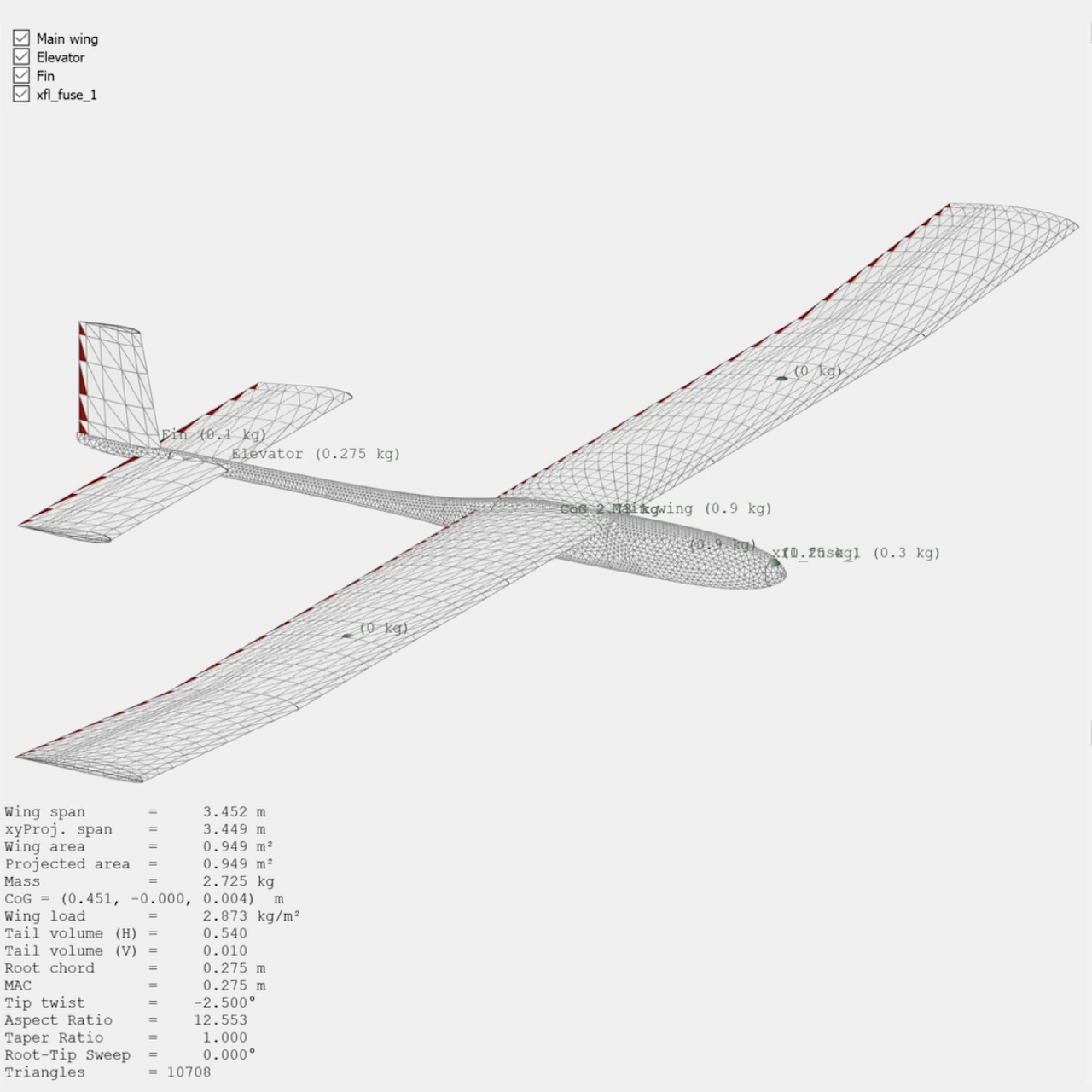
Several architectures are compared before selecting and adapting a baseline that can meet the mass, structure, solar and integration constraints of the new prototype.
Axel joins to design a control board adapted to the aircraft and its sensor suite, reducing dependence on a standard autopilot-only solution.
The research and sizing phase for Moulinsart begins with a clear objective: push the lessons of the previous aircraft into a more capable solar UAV platform.

Feedback from this version reveals untapped potential and several architectural limits. The team stops this iteration to move toward a more ambitious platform.

Prototype II is presented with and without solar cells at the Numerik Games festival in Yverdon-les-Bains. The tests reveal the next areas for improvement.

Hibou Grand-duc is designed to become the first flying prototype and to serve as a learning platform for piloting, integration and field testing.

The Service des Énergies of Yverdon joins the project through its fund dedicated to promoting renewable energy initiatives.

Raiffeisen, Ilex and Vaudoise Assurances are among the first partners to support the project and make the early development campaigns possible.

The adventure begins with initial fundraising campaigns and a first formal objective: explore solar flight through concrete, progressively improved prototypes.